

7 signs you’re in advanced perimenopause.
Advanced perimenopause, as opposed to early perimenopause which sneaks up on you and feels much more subtle, can hit you over the head with its force and impact.
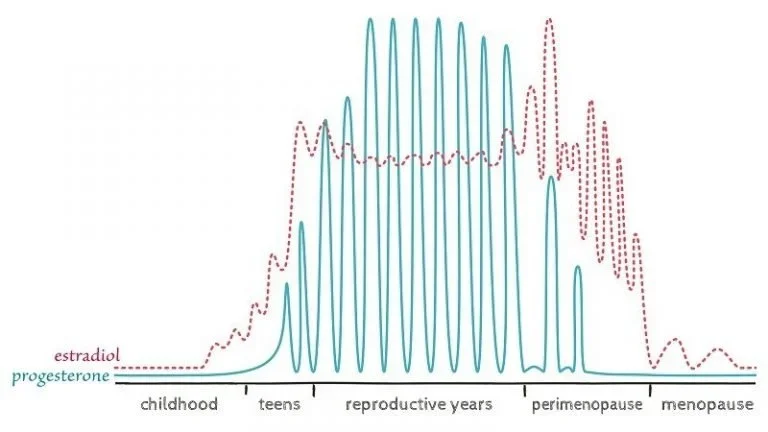
This is the stage when progesterone has already been dropping, potentially leaving you more anxious, worse slept, stressed and overwhelmed. Now, it’s time for oestrogen to fluctuate - often wildly.
Many of the signs here are not so much of the low levels of oestrogen, but the fluctuating levels. As the communication starts failing between your brain and ovaries, you can make 3 x more than you might have done in your 30’s. It’s these peaks and troughs which leads to the much more physical experience that is typical of advanced perimenopause:

1 Hot flushes and night sweats- flushing, sweating, waking up sticky.
The most common sign experienced by women in perimenopause - the only one really consistent across the globe - is heat. As oestrogen fluctuates and drops overall, it affects the thermoregulatory centres in the brain. Small shifts in temperature, like a door opening to a cold winter’s day, trigger an exaggerated response. Stress and alcohol make this much worse, and you may have your own additional triggers.
Metaphysically, you could think of the heat burning away what no longer serves you, the heat indicating a boundary needs to shift, your internal fire trying to emerge after being suppressed or perhaps rage and anger breaking through, finally.
2 Erratic, unpredictable cycles - 23 days one month, then no period for 4 or 5 months, or even as long as 11 months.
Communication between the brain and ovaries becomes unreliable, you don’t necessarily ovulate each month, sometimes not for several months, and so cycles become unpredictable.
In early perimenopause, your cycles may shorten and become more frequent. Now, they lengthen. You still bleed, but the time between bleeds may really start stretching out, often to >60 days. Towards the very end of perimenopause, you might go for some 10 or 11 months without a period. Seemingly you’re reaching the end, but then bam! - suddenly get one again, and the 12-month clock has to reset...
3 Heavy bleeding and flooding - changing hourly, needing to get up at night and have spare clothes when you’re out.
Perhaps the most inconvenient of these is the extremely heavy bleeding of advanced perimenopause, which may or may not be amplified by the presence of fibroids and/or endometriosis, and which can drain your iron stores and energy like anything.
Now that you’re ovulating less frequently, you’re not making the progesterone needed every month to balance the oestrogen and the endometrium lining builds and builds. That thickening lining, built up for longer with unopposed oestrogen, has to shed at some point, and so it does, heavily, often in gushes, clots and flooding.
4 Genitourinary Syndrome of Menopause - previously called dry vagina, plus frequent infections like UTIs.
Vaginal, vulval, and urinary tissues are very much oestrogen dependent. As oestrogen declines the loss leads to the thinning of the tissues, reduced blood flow, altered vaginal pH and microbiome stability, increased risk of UTIs, BV, thrush and other imbalances, and painful sex.
This may start well before your periods stop. Please do not leave it untreated because it's progressive and doesn't resolve on its own as some other symptoms do. It’s why in menopause and in elder years, many women experience recurring infections, may take countless antibiotics, and feel miserable. Vaginal oestrogen is safe and imperative, as is engaging in pleasure and arousal, with lube, to stimulate the area - on your own.
5 Histamine clearance issues - migraines, hives, raging anxiety, insomnia, palpitations, alcohol intolerance.
We make and need histamine for all sorts of regular functions but in perimenopause, clearing it from the body may get harder. The build up of histamine can feel pretty rough: hay fever symptoms, brain fog, terrible anxiety, flushing, bloating, reflux, heavy periods, hives & rashes, itching, nausea, frequent peeing, heart palpitations, low bp, insomnia, joint pain, migraines & headaches, terrible hangovers...
Also, oestrogen leads to more histamine, and more histamine leads to more oestrogen. And, oestrogen inhibits DAO, one of the enzymes that breaks it down (in the gut). So with oestrogen levels often going way above normal pre-perimenopausal levels, it can become quite the histamine storm.
Layer over that poor gut health which is so common in perimenopause, and unfortunate because the DAO enzyme that breaks down histamine is produced in the gut. An unhappy gut, unable to produce sufficient DAO, further reduces your ability to clear histamine.
Therefore, in perimenopause, the histamine problem is twofold: your ability to clear histamine is reduced, but you also may produce more of it, which can cause miserable symptoms.
MCAS (mast cell activation syndrome) is actually far more rare and distinct. The majority of what is seen in perimenopause isn’t MCAS, but this result of histamine build up + poor clearance.
6 Metabolism changes - weight gain, fatigue, brain fog, cravings.
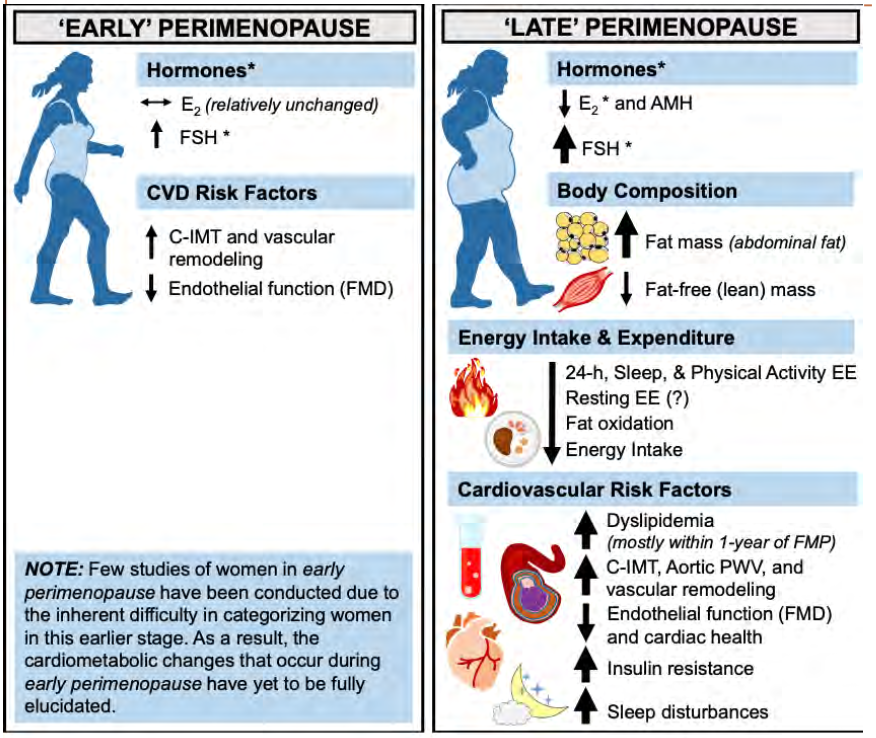
Oestrogen enables you to make energy from glucose efficiently. As oestrogen drops, that efficiency declines and glucose can build up, leading to insulin resistance, fatigue, weight gain (especially round the middle), and always being hungry - IF you aren’t already used to making energy from sources other than carbs.
I liken it to shifting from a green, eco, efficient way of making energy, to a dirty, polluting one, that’s half as good.
Modern life and its influences play their part. It’s why it is so important to adjust what you eat, and exercise well, because if not, insulin resistance, T2 diabetes and very real cardiometabolic issues can ensue.
7 Brain fog and forgetfulness - forgetting simple words, feeling wooly, unable to function at work.
Oestrogen is really important for cognitive function in women, supporting memory, verbal learning, processing speed and attention.
No surprises then that these functions change as oestrogen drops - often affectionately called ‘perimenopause brain’, but exasperating and stressful when trying to function. Additionally, the brain is used to running on glucose as fuel but we become less good at using it, so it may not be being fuelled sufficiently (see previous slide).
Also, emerging research indicates that the brain may be remodelling, or adapting, to these changes by increasing connectivity between the left and right hemispheres.
Please remember that every woman’s experience is unique, and just because these signs and experiences (not symptoms - it’s not a disease) are common, it does NOT mean you will suffer badly with them yourself. They are often quick subtle (especially with a good diet and healthy habits most of the time).
FAQ: Advanced Perimenopause Symptoms and Changes
How do you know if you're in advanced perimenopause rather than early perimenopause?
There's no test that can confirm this — it's based on symptom pattern and cycle history and considering you as an individual. Generally, if your cycles are lengthening significantly, bleeding has become heavier or more erratic, and you’re experiencing physical symptoms like hot flushes or vaginal dryness, this suggests you’re in advanced perimenopause.
Can a blood test confirm advanced perimenopause?
No. Hormonal markers can swing dramatically from one cycle to the next during this stage, so a single "normal" result doesn't rule it out, and a single "high" result doesn't confirm it either. Confirming you’re in perimenopause is about looking at the whole picture, your symptom pattern over time, and what is normal for you.
How long does advanced perimenopause last?
It varies a great between women — anywhere from a year or two to several years such as 12. There's no fixed timeline, which is part of why it can feel so unpredictable to live through.
Should I start MHT (menopause hormone therapy, also known as HRT) in advanced perimenopause?
This is a personal decision best made with a knowledgeable practitioner, since it depends on your individual symptoms, health history, and preferences. Having said that, the British Menopause Society is very clear that MHT is designed for symptom management only (unless in cases of hysterectomy and premature menopause). What's worth knowing is that MHT can be started in perimenopause itself, not just after periods stop. If you’re struggling to function, don’t wait for it to get more severe.
Can you still get pregnant during advanced perimenopause?
Yes, pregnancy is still possible as long as any ovulation is occurring, even if it's infrequent and unpredictable. Contraception is still worth considering until you've reached full menopause if pregnancy isn't wanted.
Love
Bean x